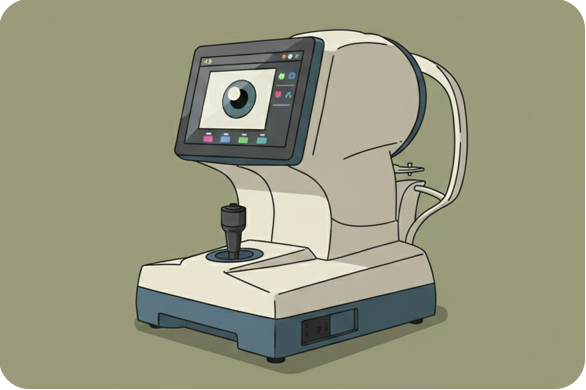
The Topcon MYAH is a state-of-the-art, all-in-one diagnostic platform that brings together multiple eye health technologies in a single compact unit. It includes a comprehensive suite of dry eye assessment tools that go beyond traditional slit lamp exams—offering objective, quantifiable measurements that help clinicians diagnose, track, and monitor dry eye more precisely.
For you, this means faster, non-invasive testing, clearer explanations of their condition, and tailored treatment planning backed by more complete data. This is something that really separates Dry Eye Treatment Centre from other Dry Eye treatment providers.
Dry eye disease is multifactorial and can be difficult to assess with basic clinical tools alone. The MYAH gives Dry Eye Treatment Centre an edge by combining advanced diagnostics that capture the tear film, Meibomian glands, blinking patterns, and ocular surface behaviour—all in one workflow.
This not only improves clinical confidence but also helps you visualise and understand your condition.
Here are the core dry eye-related assessments included in the MYAH system, and why they matter:
1. Non-Invasive Tear Break-Up Time (NIBUT)
Measures how long the tear film remains stable before breaking apart. A shorter tear break-up time is a hallmark of tear film instability, a key feature of Dry Eye. Because this test is non-invasive, it avoids disrupting the tear film with dyes or touch.
2. Meibomian Gland Imaging & Analysis
3. Tear Meniscus Height Measurement
Objectively measures the height of the tear meniscus (the small reservoir of tears along the lower eyelid). A lower tear meniscus can indicate reduced tear volume, contributing to dry eye symptoms.
4. Blink Analysis
Assesses frequency and completeness of blinking. Incomplete or infrequent blinks can worsen tear evaporation and disrupt the lipid layer. This metric helps tailor treatment recommendations, especially for digital device users and office workers.
5. Fluorescein Imaging & Video Capture
Records real-time tear film behaviour using fluorescein dye. Gives visual feedback and allows clinicians to show you how their tear film behaves between blinks and over time. Video acquisition allows for review and comparison across visits.
6. Tear Film & Corneal Aberration Dynamics
Through video and imaging, clinicians can observe how irregularities in the tear film affect overall optical quality. Helps correlate symptoms like fluctuating vision with tear behaviour.
Integrated Dry Eye Questionnaires
MYAH can incorporate validated dry eye questionnaires such as OSDI and DEQ-5 directly into reports, helping clinicians correlate subjective symptoms with objective findings.
Comprehensive Reporting
All results, including tear film metrics, Meibomian gland status, blink analysis, and imaging, can be compiled into clear, visit-on-visit comparative reports that track changes over time. This is invaluable for:
These features help reduce patient anxiety and improve their understanding of their condition.
Unlike traditional dry eye evaluations that rely on slit lamp observation or isolated tests, MYAH provides a holistic, data-rich, and reproducible view of the tear film and eyelid health. How this makes us different to other practices managing Dry Eye:
When you come in for a Dry Eye assessment with the MYAH:
A comprehensive dry eye report that informs personalised treatment planning.
The Topcon MYAH is more than a single dry eye test—it’s a suite of integrated diagnostics that elevates your dry eye practice by combining:
This advanced technology enhances our ability to diagnose, monitor, and manage dry eye with confidence, clarity, and professionalism.
Clinicians trained in dry eye management.
Personalised plans designed for your lifestyle.
Proven treatments like IPL & LLLT.
We support you from start to finish.
Improve quality of life for patients with dry eye disease.
To be recognised as the leading dry eye centre in the UK.
Innovation, Integrity, Compassion, Patient First.