
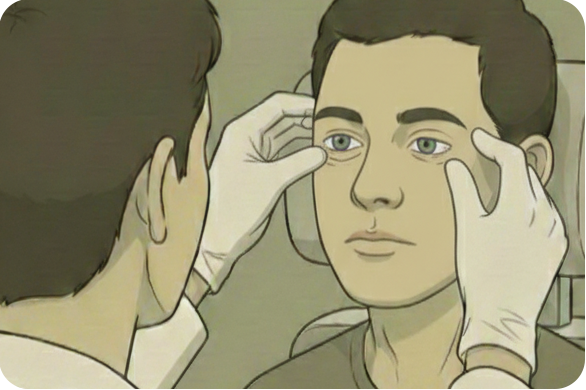
A Meibomian Gland Expression Assessment is a clinical evaluation used to assess the function and health of the Meibomian glands, tiny oil-producing glands located along the upper and lower eyelids. These glands play a critical role in maintaining a stable tear film by producing the oil (meibum) that prevents tears from evaporating too quickly.
During this assessment, a dry eye specialist applies gentle, controlled pressure to the eyelids to evaluate how well the glands are functioning and the quality of the oil they produce.
Meibomian Gland Dysfunction (MGD) is one of the leading causes of Dry Eye, yet it often cannot be fully diagnosed based on symptoms alone. Many patients have significant gland dysfunction even when their eyes appear relatively normal.
A Meibomian Gland Expression Assessment allows the specialist to:
This assessment provides direct, functional information that imaging or questionnaires alone cannot supply.
During the assessment, the specialist evaluates several key factors:
1. Gland Patency
2. Meibum Quality
The expressed oil is carefully evaluated for:
Poor meibum quality is a hallmark of Meibomian Gland Dysfunction.
3. Gland Responsiveness
The amount of pressure required to express oil
4. Eyelid Margin Health
Findings from the Meibomian Gland Expression Assessment help the specialist:
This ensures that dry eye treatment is targeted, effective, and personalised.
Step 1: Dry Eye Assessment
The assessment is typically performed as part of a comprehensive dry eye examination, alongside slit lamp evaluation, imaging, and tear film analysis.
Step 2: Preparation
Step 3: Gland Expression
Using either gentle digital pressure or a specialised handheld instrument the specialist applies controlled pressure along selected areas of the eyelid margin to observe gland output.
Only a small number of glands are assessed—this is diagnostic, not full therapeutic expression.
Step 4: Clinical Interpretation
The specialist evaluates the results in real time and integrates them with other diagnostic findings to guide treatment planning.
Most patients describe the assessment as:
While imaging technologies show gland structure, expression assessment shows gland function. Together, they provide a complete picture of meibomian gland health.
This assessment complements:
When performed by a trained dry eye specialist, this assessment is:
Suitable for repeated evaluation when monitoring progression or response to treatment
For patients with Dry Eye, periodic Meibomian gland assessments help:
The Meibomian Gland Expression Assessment is a critical component of modern dry eye diagnosis, providing direct insight into gland function and oil quality. By identifying dysfunction early and guiding targeted treatment, it plays an essential role in achieving lasting dry eye relief.
When combined with advanced diagnostics and in-office therapies, this assessment ensures patients receive comprehensive, evidence-based dry eye care.
Clinicians trained in dry eye management.
Personalised plans designed for your lifestyle.
Proven treatments like IPL & LLLT.
We support you from start to finish.
Improve quality of life for patients with dry eye disease.
To be recognised as the leading dry eye centre in the UK.
Innovation, Integrity, Compassion, Patient First.