Slit Lamp Assessments
What Is a Slit Lamp Assessment?
Slit lamp assessments is a fundamental clinical examination used to evaluate the health of the eyes and eyelids in high detail. A slit lamp is a specialised microscope that allows a dry eye specialist to examine the ocular surface, eyelid margins, tear film, and surrounding structures under magnification and controlled lighting.
In dry eye care, the slit lamp examination remains an essential tool for identifying visible signs of Dry Eye, inflammation, and eyelid abnormalities that contribute to symptoms.
Why Slit Lamp Assessments are Important in Dry Eye Diagnosis
Dry eye affects multiple structures of the eye, many of which can only be properly evaluated through direct clinical observation. The slit lamp allows the specialist to:
- Detect subtle changes in the tear film
- Assess eyelid margin health
- Identify inflammation or damage to the ocular surface
- Correlate clinical findings with patient symptoms
While advanced diagnostic devices provide objective measurements, the slit lamp assessment offers real-time, hands-on evaluation that helps guide diagnosis and treatment decisions.
What the Slit Lamp Assessment Evaluates in Dry Eye
During a dry eye-focused slit lamp examination, the specialist carefully evaluates several key areas:
1. Eyelid Margins and Lashes
- Signs of blepharitis or bacterial buildup
- Redness, thickening, or irregularities of the lid margins
- Presence of flakes, debris, or Demodex-related changes
- Lash abnormalities that may contribute to irritation
2. Meibomian Gland Openings
- Location and appearance of gland orifices
- Signs of blockage or inflammation
- Quality of expressed meibum (clear, cloudy, thickened, or absent)
- Structural changes that suggest Meibomian Gland Dysfunction (MGD)
3. Tear Film Quality
- Tear film thickness and uniformity
- Speed of tear break-up after blinking
- Evidence of excessive evaporation
- Tear debris or oil layer abnormalities
4. Ocular Surface Health
- Redness or inflammation of the conjunctiva
- Surface irregularities of the cornea
- Areas of dryness or epithelial damage
- Signs of chronic irritation or inflammation
5. Tear Meniscus
- Height and appearance of the tear meniscus along the lower eyelid
- Indications of reduced tear volume or tear instability
Use of Diagnostic Dyes During the Assessment
To enhance visualisation, the specialist may use diagnostic dyes, such as:
Fluorescein Dye
- Highlights areas of tear film instability
- Reveals corneal surface damage
- Allows measurement of tear break-up time
Lissamine Green or Rose Bengal
- Stains damaged or stressed surface cells
- Helps identify dryness affecting the conjunctiva
- Assesses severity and distribution of ocular surface disease
These dyes provide valuable information that cannot be seen without magnification and illumination.
How the Slit Lamp Assessment Helps Guide Dry Eye Treatment
Findings from the slit lamp exam help the specialist:
- Determine the type of dry eye (evaporative, aqueous-deficient, or mixed)
- Identify contributing conditions such as blepharitis or MGD
- Decide which treatments are most appropriate
- Monitor response to treatment over time
This assessment ensures that treatment is targeted and individualised, rather than based on symptoms alone.
What Patients Can Expect During a Slit Lamp Assessment
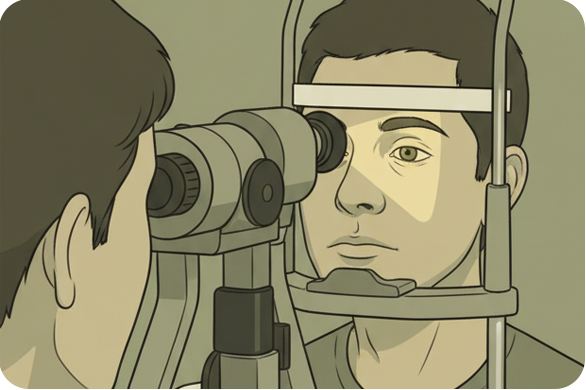
- The patient sits comfortably at the slit lamp with chin and forehead support
- The specialist examines each eye using different light angles and magnifications
- Diagnostic drops or dyes may be instilled
- The exam is painless and typically takes only a few minutes
How the Slit Lamp Assessment Complements Advanced Diagnostics
While technologies such as MYAH provide advanced metrics that separate Dry Eye Treatment Centre from other practices, the slit lamp assessment:
- Confirms clinical relevance of diagnostic data
- Detects conditions that may not appear on automated tests
- Allows dynamic evaluation of blinking and eyelid movement
- Provides immediate clinical feedback during the visit
Together, these tools create a comprehensive dry eye evaluation.
Is a Slit Lamp Assessment Safe?
Yes. A slit lamp examination is:
- Non-invasive
- Widely used in routine and specialty eye care
- Safe for repeated use
- Suitable for patients of all ages
When dyes are used, they are applied in minimal amounts and are well tolerated.
Long-Term Benefits of Regular Slit Lamp Assessments
For patients with Dry Eye, regular slit lamp assessments allow:
- Early detection of changes or flare-ups
- Monitoring of eyelid and gland health
- Assessment of treatment effectiveness
- Prevention of long-term ocular surface damage
A Cornerstone of Dry Eye Care
Slit lamp assessments remain a cornerstone of comprehensive dry eye diagnosis and management. By allowing detailed examination of the eyelids, tear film, and ocular surface, it provides essential clinical insight that supports advanced diagnostics and personalized treatment planning.
Combined with modern dry eye technologies, the slit lamp examination ensures patients receive thorough, accurate, and expert-level care.
Why Choose Us
Specialist Expertise
Clinicians trained in dry eye management.
Tailored Treatments
Personalised plans designed for your lifestyle.
Advanced Technology
Proven treatments like IPL & LLLT.
Compassionate Care
We support you from start to finish.
Mission, Vision & Values
Mission
Improve quality of life for patients with dry eye disease.
Vision
To be recognised as the leading dry eye centre in the UK.
Values
Innovation, Integrity, Compassion, Patient First.