
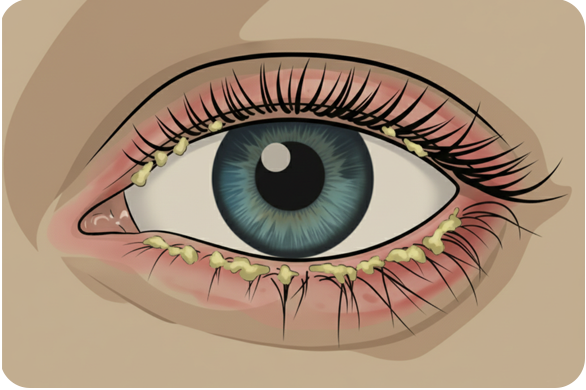
Blepharitis is a common, chronic inflammation of the eyelids that affects the skin, eyelashes, and oil glands along the lid margins. It is one of the leading contributors to dry eye disease and is often responsible for symptoms that persist despite regular use of artificial tears.
While blepharitis is not contagious or vision-threatening, it frequently requires ongoing management to keep symptoms under control.
Blepharitis develops when the delicate balance of the eyelid environment is disrupted. The most common causes include:
Meibomian gland dysfunction (MGD)
When oil glands become blocked or produce poor-quality oil, inflammation develops along the lid margins.
Bacterial overgrowth
Naturally occurring bacteria on the skin can multiply excessively, producing toxins that irritate the eyelids and tear film.
Skin conditions
Rosacea, seborrheic dermatitis (dandruff), and eczema are frequently associated with blepharitis.
Biofilm buildup
A sticky layer of bacteria and debris can form along the lash line, making inflammation more difficult to control.
Because blepharitis often has multiple contributing factors, treatment focuses on long-term control rather than a permanent cure.
Anterior Blepharitis
Affects the outer edge of the eyelid where eyelashes grow. It is commonly linked to bacterial overgrowth or skin conditions such as dandruff.
Posterior Blepharitis
Affects the inner eyelid, where the meibomian oil glands are located. This form is closely associated with dry eye disease and MGD.
Many patients have a combination of both types.
Symptoms can vary in intensity and often fluctuate:
Symptoms are often worse in the morning or after prolonged screen use.
Healthy oil glands are essential for a stable tear film. When blepharitis interferes with oil production or delivery:
This is why treatment is a critical step in managing chronic dry eye disease.
It requires a consistent and individualized treatment approach.
At-Home Management
These steps form the foundation of long-term control.
Dry Eye & Lid Treatments
For moderate to severe or persistent cases, professional treatments may be recommended:
Meibomian Gland Expression Treatment
Improve oil flow and reduce gland obstruction.
Intense Pulsed Light (IPL)
Helps reduce inflammation, bacterial load, and abnormal blood vessels associated with rosacea.
Blephex Treatment
Removes biofilm, debris, and inflammatory buildup along the eyelid margins.
Prescription medications
Antibiotic, anti-inflammatory, or steroid treatments may be used during flare-ups.
Blepharitis tends to recur because:
With proper care, however, symptoms can be well controlled, and flare-ups can be reduced in frequency and severity.
Long-term success depends on maintaining eyelid health:
You should seek evaluation if:
Early intervention helps prevent complications and improves long-term comfort.
You can read more about the causes and symptoms in NHS information on blepharitis.
Clinicians trained in dry eye management.
Personalised plans designed for your lifestyle.
Proven treatments like IPL & LLLT.
We support you from start to finish.
Improve quality of life for patients with dry eye disease.
To be recognised as the leading dry eye centre in the UK.
Innovation, Integrity, Compassion, Patient First.