
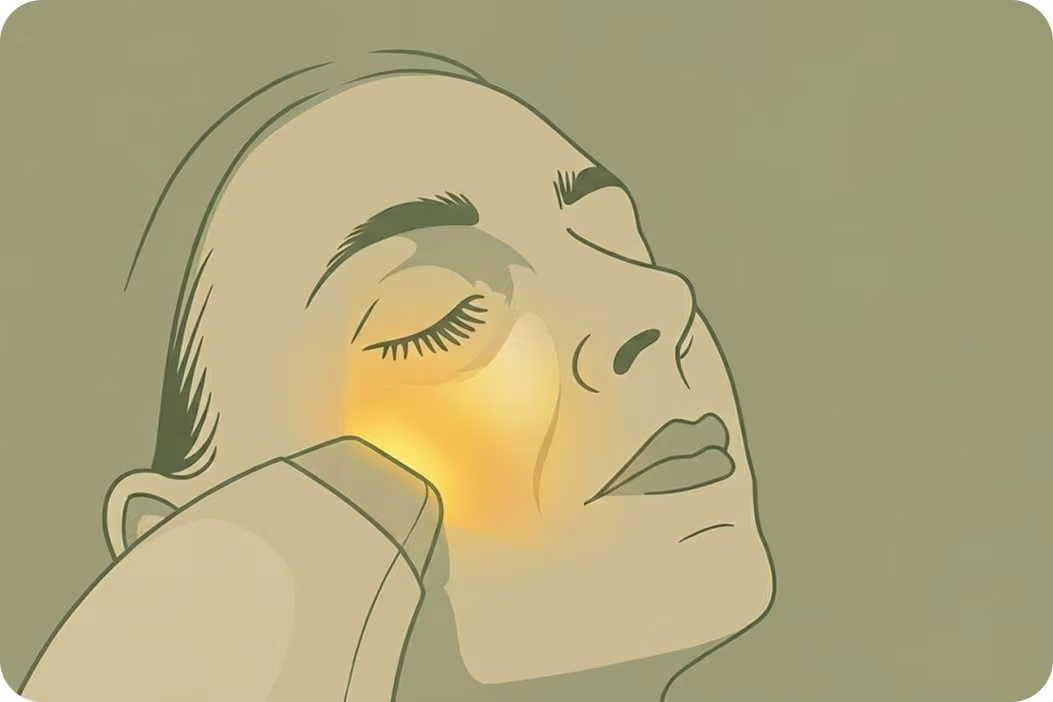
Intense Pulsed Light (IPL) therapy is an advanced, non-invasive treatment used to manage Meibomian Gland Dysfunction (MGD) and inflammatory Dry Eye. Originally developed for dermatologic conditions, IPL has been shown to significantly improve eyelid inflammation and meibomian gland function when applied in a medical eye care setting.
Intense pulsed light (IPL) uses precisely controlled pulses of light applied to the skin around the eyes to reduce inflammation, improve oil gland function, and stabilise the tear film.
Chronic inflammation plays a central role in many forms of Dry Eye. In patients with MGD, inflammation can:
A common contributor to this inflammation is abnormal blood vessels (telangiectasia) along the eyelids that release inflammatory mediators. IPL specifically targets these vessels, helping to reduce the inflammatory cycle that drives dry eye symptoms.
IPL improves dry eye symptoms through multiple mechanisms:
Reducing Eyelid Inflammation
Intense pulsed light (IPL) energy targets abnormal blood vessels near the eyelids, decreasing the release of inflammatory mediators that worsen Dry Eye.
Improving Meibomian Gland Function
The light energy gently warms the glands, helping to soften thickened oils and promote healthier meibum secretion.
Decreasing Bacterial Load and Mites
Intense pulsed light (IPL) has been shown to reduce bacteria and Demodex mites along the eyelid margins, further decreasing inflammation.
Stabilizing the Tear Film
By improving oil quality and reducing inflammation, IPL helps create a more stable tear film and reduces tear evaporation.
IPL may be recommended for patients who experience:
Your dry eye specialist will determine whether IPL is appropriate based on your symptoms, skin type, and clinical findings.
Step 1: Comprehensive Dry Eye Assessment
Before starting IPL therapy, the specialist performs a detailed assessment, which may include:
This ensures IPL is safe and appropriately tailored to your condition.
Step 2: Preparation of the Treatment Area
Step 3: IPL Light Application
The specialist delivers a series of brief, controlled light pulses to the skin beneath the lower eyelids and along the surrounding facial area. Each pulse lasts a fraction of a second.
The treatment typically takes 10–15 minutes.
Step 4: Post-Treatment Care
After IPL:
Most patients describe IPL as:
Temporary skin redness or warmth may occur but usually resolves within hours.
IPL is typically performed as a series of treatments, often:
Maintenance treatments may be recommended depending on symptom severity and response.
When performed by a trained dry eye specialist, IPL therapy is:
At the Dry Eye Treatment Centre we have chosen to adopt a superior IPL system that we feel is safer than many used by other practices. Our equipment uses cartridge heads that need to be replaced at regular intervals. These cartridges contain protective shields that eliminate the possible safety issues present with other systems that require a specific thickness of gel to be placed on the area.
Patients are screened to ensure suitability, as IPL may not be recommended for all skin tones or medical conditions.
With a full course of treatment, many patients experience:
Clinicians trained in dry eye management.
Personalised plans designed for your lifestyle.
Proven treatments like IPL & LLLT.
We support you from start to finish.
Improve quality of life for patients with dry eye disease.
To be recognised as the leading dry eye centre in the UK.
Innovation, Integrity, Compassion, Patient First.