
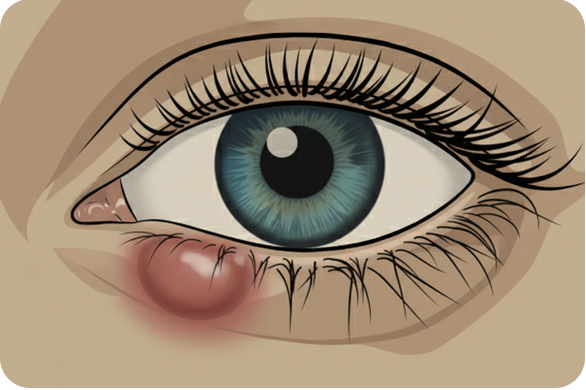
Styes and chalazions are common eyelid conditions that are closely linked to dry eye disease and meibomian gland dysfunction (MGD). While they are usually not dangerous, they can be uncomfortable, recurrent, and frustrating if the underlying cause is not addressed.
Understanding why they occur is key to effective treatment and prevention.
A stye (also called a hordeolum) is an acute infection of an oil gland or eyelash follicle in the eyelid. It typically appears as a red, tender, swollen lump, often with a visible yellow or white head.
Common symptoms include:
Styes are usually caused by bacterial infection, most commonly Staphylococcus, which thrives when oil glands become blocked.
A chalazion is a chronic, non-infectious blockage of a meibomian (oil) gland in the eyelid. Unlike styes, chalazions are usually not painful, but they can grow slowly and persist for weeks or months.
Common features include:
Chalazions are especially common in people with dry eye disease, MGD, rosacea, or chronic eyelid inflammation (blepharitis).
The most common underlying cause is blocked or dysfunctional oil glands in the eyelids.
Contributing factors include:
When oil glands become blocked, bacteria can multiply (leading to a stye), or the trapped oil can cause chronic inflammation (leading to a chalazion).
Recurrent styes or chalazions are often a sign of an untreated underlying eyelid or dry eye condition. Simply treating the lump without addressing gland health can lead to repeated episodes.
That’s why long-term management focuses on restoring healthy oil flow and reducing inflammation, not just treating individual flare-ups.
Treatment depends on the severity, frequency, and underlying cause.
At-Home Treatment
These measures are often effective for early or mild cases.
Dry Eye & Lid Treatments
For recurrent or persistent styes and chalazions, advanced dry eye therapies may be recommended:
Meibomian Gland Expression treatments
Help liquefy and clear blocked meibomian glands.
Intense Pulsed Light (IPL)
Reduces inflammation, improves oil gland function, and lowers bacterial load.
Blephex Treatment
Removes biofilm and debris that contribute to gland blockage.
Targeted medications
Antibiotic or anti-inflammatory drops or ointments may be prescribed when infection or significant inflammation is present.
Prevention focuses on maintaining healthy eyelid and tear film function:
You should seek professional evaluation if:
Early treatment can prevent complications and reduce recurrence.
Clinicians trained in dry eye management.
Personalised plans designed for your lifestyle.
Proven treatments like IPL & LLLT.
We support you from start to finish.
Improve quality of life for patients with dry eye disease.
To be recognised as the leading dry eye centre in the UK.
Innovation, Integrity, Compassion, Patient First.